Tuesday, February 21, 2012

Encomium


Pronunciation:
\en-ˈkō-mē-əm\


Definition:
glowing and warmly enthusiastic praise
 
Etymology:
Latin, from Greek enkōmion, from en in + kōmos revel, celebration


First Known Use: 1567

I saw this word used in a comment about the press after Whitney Houston's death. Here is the quote:
 
"If you've come within earshot of a mainstream media outlet in the past week, you've encountered a tribute to Whitney Houston. There's a huge unspoken presence in almost every encomium, though: perhaps out of reluctance to seem to speak ill of the dead, they don't mention Houston's disastrous 2010 tour, which was as clear a signal as the public could've asked for that the singer was suffering."
 
What a sad topic, but a great word. This is one of those words that could be used prolifically and very few would have any idea what it meant!
 
Use it, wordsmiths! Use it!

Monday, February 20, 2012

Pensive


Pronunciation:
\ˈpen(t)-siv\

Definition:
1: musingly or dreamily thoughtful

2: suggestive of sad thoughtfulness

Etymology:
Middle English pensif, from Anglo-French, from penser to think, from Latin pensare to ponder, frequentative of pendere to weigh

First Known Use: 14th century

I have always loved this word. It is very descriptive in a narrow way, much like melancholy.
 
Jack, Chase and I were driving back from Huntsville after seeing a movie and Chase, who was sitting beside me, was very quiet and looking out the window. I patted him on the leg and said, "Chase, you doing okay?" "Yes" was his one-word reply. "Are you pensive?" I asked. "Mom, I don't even know what that means. Good grief, I'm just sitting here."
 
That comment made me pensive. haha!

Wednesday, January 18, 2012

Venery


Pronunciation:
/venərē/

Definition:
the art, act, or practice of hunting


Etymology:
Middle English venerie, from Anglo-French, from Old French vener to hunt, from Latin venari

First Known Use: 14th century

This word is used in a beautifully written book I am currently reading, "Hotel du Lac" by Anita Brookner. In the following passage, Brookner is describing a woman:
"To Penelope, men were conquests, attributes, but they were also enemies; they belonged to the species that must never be granted more than the amount of time and attention she considered they deserved."
She goes on to say that Penelope "was accomplished in venery."
Accomplished in the hunt; the chase. Isn't this a wonderful word?

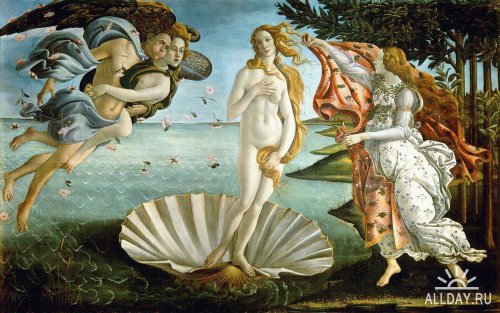
I use Botticelli's famous painting The Birth of Venus to illustrate this word because it seems to depict the chase between man and woman perfectly.

Sunday, January 15, 2012

Enamored

Pronunciation:
 \i-ˈna-mər\

Definition:
1: to inflame with love —usually used in the passive with of

2: to cause to feel a stro
ng or excessive interest or fascination —usually used in the passive with of or with
 
Etymology:
Middle English enamouren, from Anglo-French enamourer, from en- + amour love

First Known Use: 14th century

This is not a new word for any of you. However, my friend Debbie uses it in such an English way that I find that I am ... well ... enamored with her usage.
 
Debbie will describe something that someone either likes or dislikes and uses this word. "Paul is not enamored with my going to Birmingham," as an example. "I am enamored with her style of writing," as another example.
 
Just like my grandmother used to exclaim of a good idea: "That is a pregnant idea!" Debbie uses this word, typically used in the description of lovey-dovey feelings, to describe anything dealing with feeling. I love this usage!

Monday, December 19, 2011

Stolid

Pronunciation: \ˈstä-ləd\

Definition:  having or expressing little or no sensibility

Etymology: Latin stolidus dull, stupid

First Known Use: circa 1600

In Doc by Marie Daria Russell, a Dutch priest is described as stolid. Not a compliment, I would say.

I found it used again in a cute little poem titled The Adventures of two Dutch Dolls and a "Golliwogg", by Florence K. Upton. Here is an excerpt with the usage:

Said Peggy--"After work so hard,

I think a rest we need;
Let's take a ride
Seated astride
Upon this gentle steed."
 Then simple Sarah Jane climbed up
Upon his wooden back;
With tim'rous heart
She felt him start
Upon the open track.

Ere long they knew that hidden there,
Beneath a stolid mien,
Dwelt a fierce will.
They could not still
They rode as if by steam!

Sunday, December 18, 2011

Rapacity


Doc: A Novel

Pronunciation: \rə-ˈpa-sə-tē\

Definition: excessively grasping or covetous

Etymology: Latin rapac-, rapax, from rapere to seize


First Known Use: 1651

I read this sentence, "The rapacity and corruption of Indian Agents." in the novel Doc by Marie Doria Russell, page 82. I had never heard heard this word before and now I have added a new item to my vocabulary!

Wednesday, December 7, 2011

Haiku in NYC!

Finally, haiku goes mainstream!

"Curbside Haiku,” a DOT safety education and public art campaign launched in November 2011, is a set of twelve bright, eye-catching designs by artist John Morse that mimic the style of traditional street safety signs. Each sign is accompanied by a haiku poem. The “Curbside Haiku” installation can be seen citywide on 144 signs to promote road safety. Each design and haiku delivers a safety message by focusing on a transportation mode.

Placed near eye level in high-crash locations near cultural institutions and schools, the colorful signs draw attention to the critical importance of shared responsibility among pedestrians, bicyclists and motorists in keeping New York City’s streets safe.

Friday, November 18, 2011

Mellifluous

Pronunciation:
\me-ˈli-flə-wəs, mə-\

Definition:
1: having a smooth rich flow
2: filled with something (as honey) that sweetens

Etymology:
Middle English mellyfluous, from Late Latin mellifluus, from Latin mell-, mel honey + fluere to flow; akin to Gothic milith honey, Greek melit-, meli


First Known Use: 15th century

My husband heard this word yesterday on NPR while listening to a story about a man's speech. Before I looked up the word, I thought it may be a negative term, but it is quite complimentary. Another very descriptive word for you to add to your vocabulary!

Thursday, November 17, 2011

Insular

Pronunciation:
\ˈin(t)-su-lər, -syu-, ˈin-shə-lər\
 
Definition:
1a : of, relating to, or constituting an island b : dwelling or situated on an island

2: characteristic of an isolated people; especially : being, having, or reflecting a narrow provincial viewpoint
3: of or relating to an island of cells or tissue

Etymology:
Late Latin insularis, from Latin insula island

First Known Use: 1611

The 2011 National Book Award winners were announced. The awards are long considered to be insular, and this year was no exception. In this case, I would prefer this definition: ; standing alone; isolated. While I don't think some mainstream books deserve an award, it would be nice for more popular authors and titles to be considered. It seems that they can't win unless they lack an audience.

Sunday, October 30, 2011

Coffer


Pronunciation:
\ˈko-fər, ˈkä-\

Definition:
1: chest; especially : strongbox

2: treasury, funds —usually used in plural
3: a recessed panel in a vault, ceiling, or soffit

Etymology:
Middle English coffre, from Anglo-French, ultimately from Latin cophinus basket, from Greek kophinos

First Known Use: 13th century

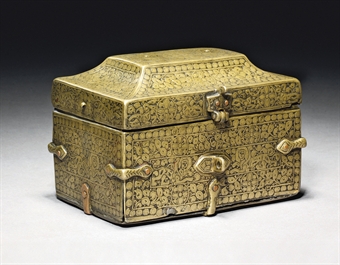
I heard this word this morning during our sermon. The preacher was talking about Catholics being able to purchase forgiveness of sins, or the security of a loved one's release from purgatory (the purchase of these is called indulgences). Preacher explained that as soon as the coins hit the bottom of the coffer, the loved one would be released into paradise. It's a word not widely used now, and I liked it!

Saturday, October 29, 2011

Disentangle

Pronunciation:
/disenˈtaNGgəl/

Definition:
1.Free (something or someone) from an entanglement; extricate
2.Remove knots or tangles from (wool, rope, or hair).

Etymology:
None found

First known use: 1550

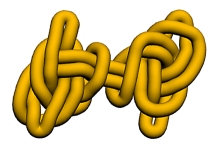
I ran across disentangle in a book I was reading and wondered why the author would use this word, as opposed to untangle.

To get to the bottom of it, you would have to go back to the root of the words: tangle. Entangled is almost always used when one thing becomes entwined with another, not when one thing becomes entwined or interwoven in itself, as with hair.

Does that straighten it out for you?

Friday, October 28, 2011

Stultify

Pronunciation:
\ˈstəl-tə-fī\

Definition:
1: archaic : to allege or prove to be of unsound mind and hence not responsible

2: to cause to appear or be stupid, foolish, or absurdly illogical
3a : to impair, invalidate, or make ineffective : negate b : to have a dulling or inhibiting effect on

Etymology:
Late Latin stultificare to make foolish, from Latin stultus foolish; akin to Latin stolidus stolid

First Known Use: 1737

The government has been stultified by bureaucracy.

Thursday, October 27, 2011

Charlatan

Pronunciation:
\ˈshär-lə-tən\

Definition:
1: quack
2: one making usually showy pretenses to knowledge or ability

Etymology:
Italian ciarlatano, alteration of cerretano, literally, inhabitant of Cerreto, from Cerreto, Italy
First Known Use: 1618
I love this word! The very idea that someone would practice trickery for monetary gain...wait...isn't that what politicians do? HA!
 
Famous charlatans:
  • John R. Brinkley, the "goat-gland doctor" who implanted goat glands as a means of curing male impotence, helped pioneer both American and Mexican radio broadcasting, and twice ran unsuccessfully for governor of Kansas.
  • Albert Abrams, the advocate of radionics and other similar electrical quackery who was active in the early twentieth century.
  • Italian Alessandro Cagliostro (real name Giuseppe Balsamo) who claimed to be a count.
  • The mystical Count of St. Germain.
  • Charles Ponzi, for whom the "Ponzi scheme" is named, a scam that relies on a "pyramid" of "investors" who contribute money to a fraudulent programme.
  • Bernard Madoff, an American stockbroker who ran the worlds largest Ponzi scheme, defrauding investors out of $18 billion.
Don't be a charlatan!

Wednesday, October 26, 2011

Aficionado

Pronunciation:
\ə-fi-sh(ē-)ə-ˈnä-(ˌ)dō, -fē-, -sē-ə-\

Definition:
1: A person who likes, knows about, and appreciates a usually fervently pursued interest or activity\
2: A person who is very knowledgeable and enthusiastic about an activity, subject, or pastime.

Etymology:
Spanish, from past participle of aficionar to inspire affection, from afición affection, from Latin affection-, affectio
First Known Use: 1802

My dad bought a bow tie this past weekend. Now he had to learn how to tie it. I remember a few weeks back, Strat, Jack and I were trying to watch videos on YouTube to learn how to tie a necktie. Jack finally just went upstairs, but Strat and I took it personally that it was not easy for us to master immediately and we tried and tried and tired to tie those stupid neckties. Finally, we stopped, furious, yelling and in terribly, caustic moods. It makes me laugh today.
 
Mother reported that Dad, too, went to YouTube to try to learn to tie a bow tie, with the same results that Strat and I experienced: anger and frustration resulting in a very cleansing yelling at the computer screen.
 
Here is a video of NFL linebacker Dhani Jones, a self-proclained aficionado of bow ties, showing how to tie one. There are even publications for aficionados: Doggie Aficionado, Cigar Aficionado, Toad Aficionado, Shoe Aficionado and Guitar Aficionado. There is a band, teliquia brand and book club that all bear the name.
 
This is a word to add to your vocab!

Monday, October 24, 2011

Venerate

Pronunciation:
\ˈve-nə-ˌrāt\

Definition:
1: to regard with reverential respect or with admiring deference
2: to honor (as an icon or a relic) with a ritual act of devotion

Etymology:
Latin veneratus, past participle of venerari, from vener-, venus love, charm

First Known Use: circa 1623
This is a nice word to have in your vocabulary. When our school district was recently prevented from a student saying a prayer over the PA system before football games, a great many Friday night fans chose to say The Lord's Prayer during the moment of silence. I would say that we used that time to venerate the Lord with our corporate recitation.
 
When you see Catholics make the sign of the cross, they are venerating the death and resurrection of Jesus. Just as many protestants wear a cross as jewelry.
 
A listed synonym for this word is "deify". I have to disagree with this because I don't think the vast majority of wearers of a cross actually worship the item. They don't deify the object. It is merely an outward sign of the inward devotion. What do you think?

Friday, October 21, 2011

Invective

Pronunciation:
\in-ˈvek-tiv\

Definition:
1: Of, relating to, or characterized by insult or abuse
2: Insulting, abusive, or highly critical language.
 
Etymology:
Middle English invectif, from Middle French, from Latin invectivus, from invectus, past participle of invehere

First Known Use: 15th century

Isn't this a great picture? It shows perfectly what this word means. There's a harshness to the word that any other photo just didn't get across.

I came across this word while reading the forward in a book titled ne*gro*phi*li*a. He is a biracial man who has been criticized for his views of how racist blacks have become. The forward shows a few names he has been called, including 'race traitor', 'black white boy' and a few more that I won't type here.

Tuesday, October 18, 2011

Derive

Pronunciation:
\di-ˈrīv, dē-\

Definition:
1a : to take, receive, or obtain especially from a specified source
b : to obtain (a chemical substance) actually or theoretically from a parent substance

Etymology:
Middle English, from Anglo-French deriver, from Latin derivare, literally, to draw off (water), from de- + rivus stream — more at run

First Known Use: 14th century

This word sprang up today from the "Ask the Editor" video on Merriam-Webster's website. The word was "gridiron" in honor of football season, and the editor used derivation, a form of derive: "The line of derivation isn't quite so straight."
 
She was talking about the origin of the word gridiron as derived from a 13th century torture device called a gridrion (where we derive the word "griddle" - you can imagine what the nature of this torture was). Sound appropriate? This is where the editor cautions that it's not quite as it seems, since the true reason for calling a football field a gridiron is not because it is a tortuous sport, but because the lines on the field resemble a cooking grate.
 
A slight deviation in the derivation. (tee hee)

Monday, October 17, 2011

Volition

Pronunciation:
\vō-ˈli-shən, və-\

Definition:
1: an act of making a choice or decision; also : a choice or decision made
2: the power of choosing or determining
 
Etymology:
French, from Medieval Latin volition-, volitio, from Latin vol- (stem of velle to will, wish) + -ition-, -itio (as in Latin position-, positio position)

First Known Use: 1615

I was not coerced into using this word. I did so of my own volition.
 
I'm not sure why this word popped into my head this morning. Only to say that I am doing a little Bible studay and the topic is predestination. That's all I will say about that!

Sunday, October 16, 2011

Ornery


Pronunciation:
\ˈor-nə-rē, ˈär-; ˈȯrn-rē, ˈärn-\

Definition:
: having an irritable disposition : cantankerous

Etymology:
alteration of ordinary; 1816, Amer.Eng. dialectal contraction of ordinary. "Commonplace," hence "of poor quality, coarse, ugly." By c.1860 the sense had evolved to "mean, cantankerous."

First Known Use: 1816

Jim calls our cat, Lilly Belle, ornery. I must admit, she is a bit grumpy at all times, particularly since we introduce the kitten into the household. She hisses, growls, runs, and will even move to snap at anyone who touches her when she is in "a mood". She has yet to bite, but she is letting you know that she is thinking about it.
 
Yep. Ornery is a pretty good word for 'old Lilly Belle.

Friday, October 14, 2011

Soup to nuts

I was on a conference call this morning at work when someone used the phrase "soup to nuts". I had never heard such and was pretty sure he was making it up. Wrong!

"Soup to nuts" is an American English idiom conveying the meaning of "from beginning to end". It comes from the description of a full course dinner, in which courses progress from soup to a dessert of nuts. It is comparable to expressions in other languages, such as the Latin phrase ab ovo usque ad mala ("from the egg to the apples"), describing the typical Roman meal.

I guess I didn't recognize it because I NEVER eat nuts for dessert!